Friday, 29 June 2012

Time now for "What's Goin' On"

The post title is amusing only to those who received cable tv channels from Maine in the 70's and 80's.  If you are hoping to read about upcoming events at the Bangor Mall, you are going to be sorely disappointed here.

It's just over a month since my hasty post about what was going down (and coming up) in the garden, so here is an update.

Tomatoes were all transplanted by the first weekend of June and all except one have survived the onslaught of flea beetles.  Another one, planted upside-down, appears to have succumbed to a broken stem suffered during high winds.  All others are looking sturdy.  They always look terribly weak and vulnerable after transplant and toughen up incredibly fast.  They have already had their first axil pruning.  Peppers, melons, cucumber and basil are all in containers.  I've put one container of watermelons, one of peppers, one tomato in the greenhouse to see how they like it there in the summer.  All potatoes successfully sprouted and have blossoms already.
defiant tomato
potato bed june 24

costata romanesca
 june 9


Only three zucchini plants made it to transplant and they are now hanging over the sides of their bed.  (The grim hue of the early photo is a result of me forgetting I'd been playing with the white balance on my new camera.)  I'd better remember to measure the full grown diameter this year; one plant has already shaded the ground cherry I thought was a reasonable distance away from it.  Fencing and a guard iguana have been installed to protect the ground cherry.
costata romanesca june 28

red kuri getting a grip
Four winter squash plants made it to transplant: one Uncle Dave's Dakota Dessert and three Red Kuri.  We got one large and excellent Red Kuri gourd last year and would like to have more.  Uncle Dave's is there for back up.  The squash ladder worked out okay in 2011, but had to be moved for the sake of crop rotation.  Squash are in the "heavy feeder" group.  In moving the ladder, I also turned it, for some reason I don't recall, and the plants were place on the south side of the mesh they are meant to climb.  Of course they all tried to vine south, away from the mesh.  I applied some encouragement yesterday and hope they soon get a better grasp of what they are supposed to do.
beets and chard undercover


Beets and Swiss chard are lush and almost blemish free in their covered bed.  It's not a tight seal, but enough to drastically reduce access for leaf miners.  It has been years since we have been able to just rinse and slice the Swiss chard without first tearing away the scabby bits.  With the row cover protecting it from heavy rain and pests, we barely need to rinse it before eating.  Downside, the bed would look more beautiful without the cover (but only until the leaf miners found it).  The section with beets (foreground) has grown especially bulgy. I might have to start eating around the edges.


To be continued......

Thursday, 28 June 2012

Parsnips everywhere

the parsnip that started it all
It started in 2008, when I sowed my first parsnip seeds.  I wasn't that excited about it, associating parsnips with turnips, which I don't care to eat.  We dug up most of them the following spring but I left one in the ground to see what would happen.  In spite of my lack of experience, I knew it was a biennial plant and that something would happen.  Very much to my surprise, it grew to be almost as tall as me and branched out with great umbels that grew seeds.  I was in awe of it, much as I had been of bolted lettuce plants the first time I saw them.  It was some time after the seeds had developed sufficiently to produce new plants that the flower blew over in a storm, falling directly south toward the the fence.  No doubt there was a great scattering of seeds that night, but there was also the dragging of the plant off to the compost after we realized the stalk could not be righted.  Still, we had no idea how far those seeds had been flung.

In the spring of 2010, parsnips sprouted from the lawn.  They still do.  They emerged around the two bee balm plants where the flower toppled and along the periphery of that side of the garden.  I let them grow, thinking of them as potential food.  One of the volunteers growing right next to the cinder block border of the garden was our prize parsnip that year.  It was a huge effort to uproot it from where it had burrowed under the brick.  Others weren't worth picking; the next year they became flowers.  We let a few of them go, if they weren't in the way.  We had to remove one that grew to overhang a narrow pathway.   This was due to the ant hazard.  Ants find parsnip flowers to be great range land for their aphid herds.  You don't want to have to brush past a plant where defensive ants loiter at neck height.

What happened with the 2011 flowers, I don't know.  I thought we carefully removed all the seeds before they had a chance to escape.  Still, seeds got around.  The wind may have blown them off when we weren't looking.   2009 seeds from the distributed compost could have germinated.  I wouldn't put it past the ants; they love to carry stuff around just to show off their impressive jaw strength to body weight ratio.  There are now parsnips growing in every bed of the main garden.  I don't think they have infiltrated the new raised beds.

parsnip in bee balm

This is the smallest bee balm plant with a tiny parsnip.  It's difficult when they get in among the roots of perennials.  We pull parsnip leaves from the larger bee balm plants every week.  One even managed to make a flower before we caught it.  The root has to be exhausted eventually, I hope.


parsnips with lettuce
This is one of the beds where I sowed parsnips in 2011.  They did not do well.  I can't tell yet whether these are first or second year plants.  Though it's logical that last year's planting would yield second year plants here, I don't see any sign of a flower yet.  I think it would be happening by now.


parsnips with brussels sprouts

  Now here is a nightmare for some children: two of their not so favourite vegetables side by side.  I feel quite confident that these are growing from seeds this year.  I had snow peas and carrots in this section last year and was weeding like a fiend to keep sow thistle from going to seed here (for all the good that did).  Would have noticed parsnips.  I haven't checked The Vegetable Gardener's Bible to see if these two are good companions.  They are both doing fine.


parsnip with sunchokes
The sun chokes are growing so thick in this bed, it may be difficult to see the parsnip that is happily situated on the sunny side of the rectangle.  It's huge.  For a while I was thinking that anything that got that big that quickly had to be second year.  But I don't remember when this one started.  Another wait and see.  It will be interesting to see how deep it can grow.  The bed was created on top of lawn, so the root only has about eight inches to go before it hits the lovely hard packed clay substrate that we enjoy so much in Lethbridge.

They are found among the peas and pole beans and tomatoes, and growing out of the sides of the mounded beds. They are not fussy about where they grow or how deeply the seeds are planted.   All they need is water, light and space. With all the pests we find in the garden, nothing goes for parsnip leaves or roots. I have come to enjoy eating the roots, especially if prepared with butter and garlic. Somewhere I read that the leaves were edible, but then Barry (after I encouraged him to try eating a leaf) found several sources that say they are poisonous and can cause burns on contact with skin. I always wear gloves in the garden anyway.

parsnips with intent, and onions
I did sow a bed with parsnip seeds in May, from 2009 seeds.  Intended to do more when I figured out where they could go, but never did get it done.  This will not be enough.  Though there is space available, there is not enough growing season left.  Therefore I am leaving all the volunteers in place until they sprout stalks and umbels.  They may even do better than the mass planting, which is due for a thinning.  So why not just shake a couple of flowers over the entire garden in late summer and let them grow where they like?  Mainly because I want to know exactly where to dig for them in the winter, and because once I find a parsnip growing in the spring, it's hard to sacrifice it to make room for a beet, and because they might take over the planet.

Sunday, 17 June 2012

Animal Farm

"Indy, why does the floor move?"  In Raiders of the Lost Ark, it was snakes.  When the ground moves on my street, it's usually ants.  Sometimes I dig them up by accident and a shiny black slick rises to the surface. What's the going commodity price on a barrel of ants? I wonder.  Occasionally there is an almost imperceptible wave across the rock garden.  Something is in motion, but you have to look closely to see that it's ants on the move.  I suppose they get restless by times.  The other day I lifted a bucket that had been left too long in one spot.  The ants have no sense of the temporary nature of a plastic bucket.  The underside had an outer rim that elevated the bottom of the bucket just enough to make it the roof of a lovely ant nursery.  I ruined everything.  Well, not quite.  I could have ruined everything, but instead of viciously stomping on their baby sisters (which look very much like toasted puffed rice cereal), I took a video of the ants hurrying them to underground safety.  That's about all the attention the ants have received from us lately.  If they want to distract us from the other animals in our yard, they will have to be a lot more trouble.

It's caterpillar season again.  We find forest tent caterpillars ascending the trunks of green ash trees on the boulevard.  Barry has banded these trees with fiberglass insulation and tanglefoot, and ventured as far as his ladder will reach to remove any visible (and accessible) clusters.  But the trees are huge.  Out of reach, thousand of caterpillars munch through the leaves and defecate on the ground, the sidewalk, vehicles, formerly clean laundry hung out to dry, flowers and foiliage in the front garden.  I suppose the vegetable garden is getting a little more sun this spring, with most of the leaves of the big shade tree having been processed into little black granules and dropped to the ground.  There is a green ash not far from here that has been completely defoliated.  A few crispy rolled up leaves dangling from one twig were the only evidence that it wasn't dead.  It is said that trees can recover from complete defoiliation, and we have seen some new healthy leaves emerging.  But can they do it year after year?
It's not just the huge trees.  The apple tree is a wreck and the pear tree is better but still mangy.  The critters are also into the haskaps, strawberries, and even the new cotoneaster hedge, whose tiny leaves you would think are not even big enough to roll up into a shelter.  And the dangling of the younger larval instars (as seen here on the water tank)!  The air is thick with them by times.  They are unavoidable.  As we headed out on a bike ride (it was nice to have a few hours away from tall trees), Barry observed a mobile of caterpillars spinning and swaying, glowing in the morning sun.
We are trying to do our bit to stop the devastation, with the afore-mentioned tanglefoot plus Btk and Trounce and a knife and a fly swatter and electric bug zapper rackets and our shoes, even fingers in a pinch.  Greenhaven was sold out of Btk today, but there are rumours that Country Blooms still has some.  How long before it's only available at inflated black market prices?

Leafhoppers sucked the life out of our grape and Virginia creeper leaves last summer.  I can't see in past blog posts that I recorded this, which is quite disappointing because I would like to know when it was they overwhelmed us and caused us to resort to using the Shop-Vac.  This photo was taken mid-August and looks to be early in the battle.  They made short work of the leaves at the time, but the vines were still able to produce grapes.  Now we see them in June.  Barry has been diligent with the soap spray, trying to nip this plague in the bud.  The tricky part is getting to the underside of leaves (where the hoppers feed) of vines making their way across the greenhouse roof.

Another pest that seems to have shown up early is some form of flea beetles.  These have always shown up en masse late in the summer, usually on squash leaves or bolted radishes, where they weren't going to have much effect on garden production.  I don't recall seeing them in June before, and not on tomato leaves.  It is likely a different kind than we have had; there do seem to be species that go for different plants.  Anyway, there they were last weekend, chewing holes in the wee tomato plants.  More work for the insecticidal maniac.  I left straw mulch on the garden beds over winter.  Is this a kindness to pests?


There has also been some clandestine eating of pole beans and bush beans, but these are one-plant-at-a-time type attacks, and they were due for some thinning.  May be we should just grow onions and parsnips.  They seem to be invincible.  Or maybe we should give in and call these animals "livestock" instead of "pests".

Sunday, 27 May 2012

All dig, no write

Work.  Dig.  Move dirt.  We are turning into ants.  It's hard to find the time, and peace of mind, to write about it.  Ants don't write.  They live in the moment.

In spite of the mild winter passed, we still get frost warnings well into spring.  The seedlings can stay in the greenhouse tonight, but transplanting has to wait until next weekend, when we hope it will be safe.  Most of them look too small to be out in the wide open beds anyway.  They couldn't even survive a sparrow attack.

Annuals:  We have planted lettuce, cress, onion, parsnip, carrot, beet, Swiss chard, peas, bush beans, pole beans, shallots, Brussels sprouts, radishes, corn, potatoes.  Not exactly in that order.  Only the shallots are still hiding.

Biennials:  A small patch of carrots that amounted to barely anything last summer is now growing quickly into adulthood.  I expect they will be forming flowers within a month.  Hope I can figure out what variety they are.  The row of parsnips  biding their time next to shell peas last year was also set to take off, but have been diverted to the compost track.  A patch next to the back alley will be allowed to grow tall, alongside other high achievers like sunflowers and sweet peas.

Perennials:  Rhubarb has survived it's removal to the boulevard, where it shares its quarters with a solitary sun choke that was left behind.  Sun chokes have also emerged where they are expected to, in two back yard beds, starting two or three weeks ago with the plants not harvested.  Tubers that were dug up and replaced in the ground are still sending up shoots.   We've had our very meagre haul of asparagus and are now letting the spears grow into ferns.  Garlic is growing in three different sizes, from cloves, bulbils and teardrops.    I hope some is ready to eat soon, because last year's stock is now gone.  (Maybe garlic shouldn't be classified with the perennials, but it would just keep going if we left it in place.)

Self-seeders:  Cilantro, dill, parsnips, carrots, peas, pak choi, Swiss chard, and borage are all showing  up where they weren't expressly asked to be.  It's fine.  Why should the gate crashing be left to only dandelion, creeping bellflower, quack grass, and sow thistle?

Fruit:  The first ripe haskap berries were spotted on Wednesday.  Some strawberry plants are blooming.  Raspberry canes proliferate and are developing proto-blossoms; fruit is a long way off.  Grape leaves are barely out and we can see flowers (minuscule bunches of grapes) already.    Nanking cherries had very few blossoms.  Apple tree had only one and is again ravaged by pests.  Pear tree blossomed but it's hard to tell yet whether any were pollinated.

In brief, this is how the black thumb's garden stands on a rainy last weekend of May.  As my working hours are reduced in accordance with the academic quiet time, and weekly scheduled activities promise a summer break, I hope to get back to more thoughtful and useful (and frequent) reports.

Sunday, 11 March 2012

Spring ahead

The onset of Daylight Savings Time.  The impending vernal equinox (nine days away!).  I said a year ago that spring never comes early.  Let me restate that: Spring had never come early following the six winters I had spent in Lethbridge.  I may have been jumping to a hasty conclusion. This weekend we have spent time working in the back yard, enjoying sun and mid-teen temperatures.  Leaves are emerging from honeysuckle stems and bloody dock roots.  A few of the ladybugs exposed when I cleared away the old Swiss chard plants were ambulatory.  Given the odd winter that has been, it's possible to believe that the weather will not turn severely cold again until after the growing season.  But it's impossible to be sure.  Mild weather is expected to continue for the rest of Winter, which may be long enough to convince some plants that it is now safe to grow.  There could be some sad stories of frost-bitten ambitions in the near future; it could all be just fine.  No point fretting about it.

While Barry toiled in the raised bed area he is creating, I filled some empty containers with earth.  Now we have 11 more containers for plants that like their roots warm, and we have a smaller dirt pile near compost as well as less clutter in the greenhouse.  Win-win-win.  Barry had the harder task of dismantling two garden beds surrounded by cinder blocks (now colonized by yarrow) and leveling the ground to put in a new raised be (and then three more).  I think it will be a huge improvement.  The long beds looked good last year, but on closer inspection, too much of that lush growth was peripheral weeds.

We harvested a few parsnips and sunchokes today - first homegrown food of 2012.  The arugula in the kitchen doesn't count because we haven't been eating it.  It's more like a chia pet.

Saturday, 17 September 2011

Tuber time

Our first sun chokes were planted on the boulevard, in a raised bed build on top of the lawn.  The site is subject to wind from the west and midday shade from the huge trees that line our street.  There was no opportunity cost to planting them in that location - we were not short of tubers in the other areas that were available - so it was no great mischief that they didn't thrive.  They grew to all of three feet tall (guessing) and were often limp, probably a result of the wind.  Meanwhile, their relatives that were lucky enough to be planted in sunnier places on the leeward side of the house have grown well over six feet tall and look chronically perky.  This morning I dug up the boulevard sun chokes, in recognition of their inferior performance and out of curiosity about what is happening underground.

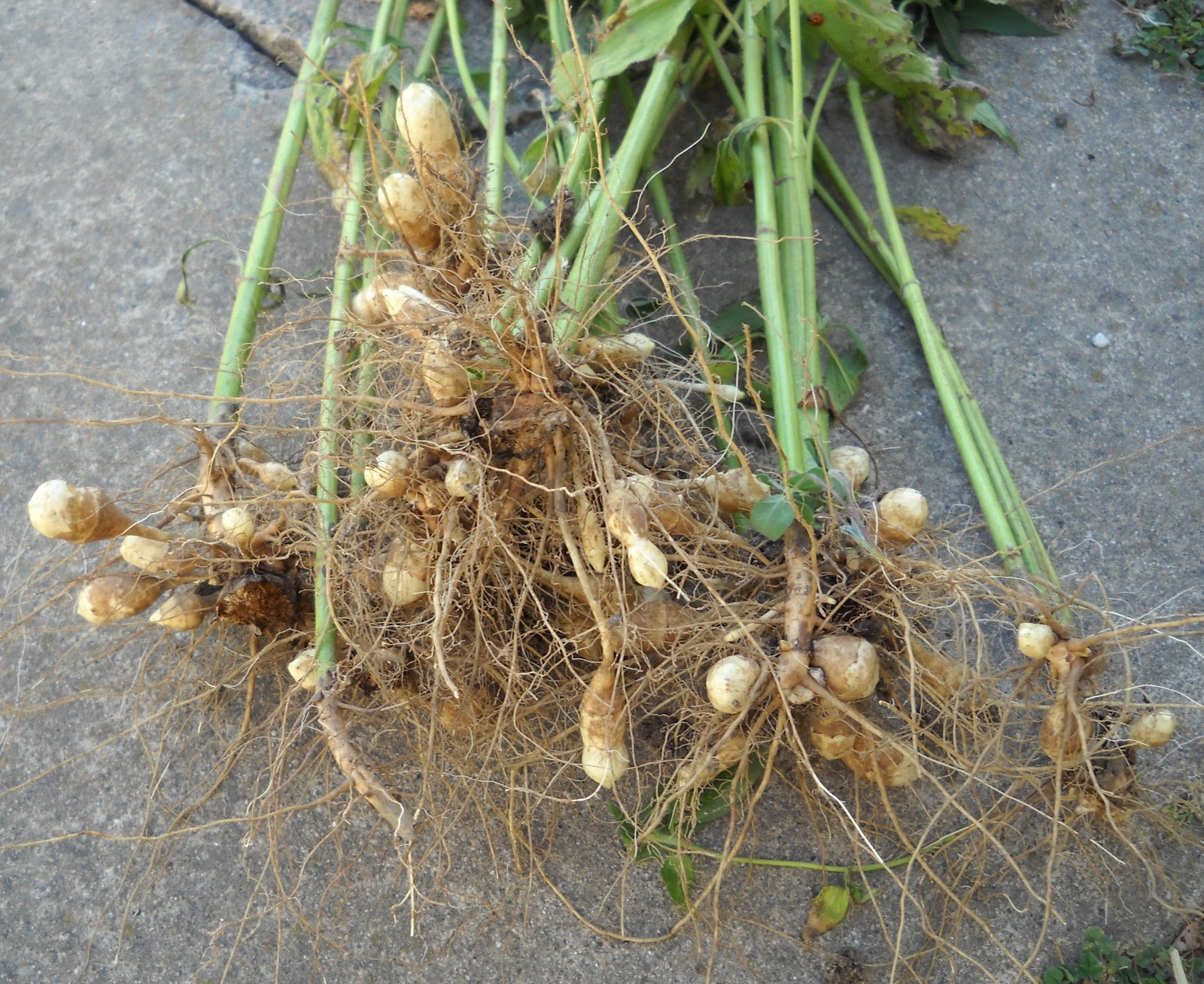
Things were happening.  Most of the roots had developed a few small tubers.  After being pulled off the roots, they filled a single layer of a square food container (picture a Ziploc 500ml food saver).  Not much, possibly not even quite ready to eat (the tubers are said to be tastier after a hard frost or two), but I hope to give them a try tomorrow.  Hope they don't require peeling; there would be almost nothing left to eat.

The backyard sun chokes are finally, in the third week of September, indicating that they might flower before they freeze to death.  All summer I have been poking at their tips and finding infinite layers of leaves; now many of them have a tiny green disk like a sunflower, only a thousandth of the size.  Lately, I've had to reach up and bend the top of the stalk down toward me to see what's happening.  Until now, no flowers but usually a ladybug party.  We have ladybugs all over the garden this summer, like never before, but nowhere do they look so comfortable as they do in the sun choke leaves.


backyard sun chokes


Curiosity will drive us to try dig up at least one of these plants from each remaining location before winter.  Then we have to memorize the quality of the food until spring so we can compare and see if it's worth leaving them in the ground all winter.  I have little doubt that the seed tubers should be left in the ground, but we don't know about food.  We enjoy eating freshly dug parsnips in the spring.  Wouldn't mind having another crop like that.


All the potatoes were dug up yesterday.  The tops had mostly turned yellow, shriveled, and hurled themselves into the straw.  No further growth expected here.  The haul was okay, but really could have been better.  I expected them to go deeper; most of the potatoes were quite close to the surface.  I even went through the bed a second time this morning with a shovel, rather hoping I had missed more than a few.  I had missed just a few.  But, it's good enough.  We have probably as many potatoes as we will want to eat before they begin to deteriorate (we don't have ideal storage conditions) and I managed to stab a mere three tubers during the harvest process (my mutilation rate is normally much higher than that).  Soon the rattlesnake bean tower will be dismantled and I can go in and get the rogue potatoes from that bed.

Sunday, 4 September 2011

State of the garden - Labour Day weekend

Pea vines have turned brown, potato plants have keeled over, and a few squash vines have been chopped up for compost.  At the same time, scarlet runner vines continue to grow lush dark leaves and bright blossoms, parsnips are having a spurt of their own, and Jerusalem artichokes reach skyward, showing no sign of flowering yet.  Life cycles are all over the place.

Bee balm, borage, sunflowers and clover continue to nourish "our" bees.  Wasps seem to be more plentiful every day, hunting among the vegetables for prey for their young or chewing on the greenhouse wall to furnish their nests.  Delicate cabbage moths flutter about in twos and threes, pretty if only we can forget for a moment what they do to our crucifers.  Dragonflies hover, pace, and dart about within their invisible boundaries.  Haven't seen what they are eating.  It's a lively place.

September 2 brought the dreaded phrase "frost warning" back into our life.  Although Lethbridge was not mentioned in the report, there was a warning for Calgary, Okotoks, Magrath and Cardston.  Hard to see how it would be any different here, and the forecasted low was 2C (with "feels like -2C").  We survived unscathed and seasonal overnight temperatures have returned.  Sigh of relief.  I didn't think this would come so soon.